


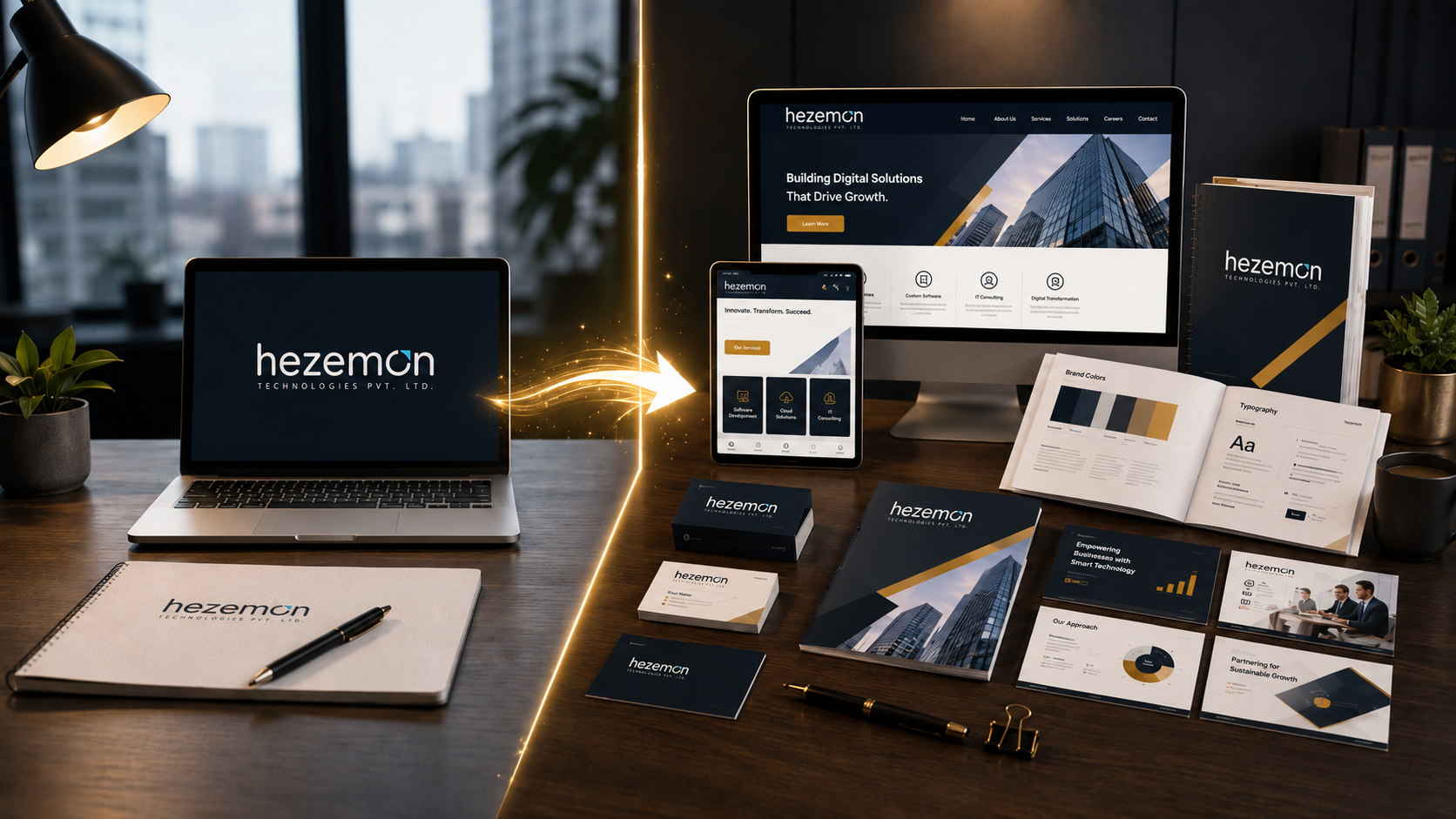
Many businesses start their branding journey by asking one common question: “Can you design a logo for us?”
A logo is important, but it is not the complete brand.
In today’s competitive digital world, customers do not judge a business only by its logo. They judge it by the website, social media posts, company profile, pitch deck, advertisements, email communication, packaging, presentations, and every visual or written message they see.
This is where Brand System vs Logo Design becomes important.
This is where the difference between logo design and a brand system becomes important.
A logo gives your business a visual mark. A brand system gives your business a complete identity.
For growing businesses, startups, schools, hospitals, IT companies, real estate brands, manufacturers, and service-based companies, a strong brand system helps create trust, consistency, recognition, and professional communication across every customer touchpoint.
What Is Logo Design in Brand System vs Logo Design?
Logo design is the process of creating a unique symbol, wordmark, or visual identity that represents a business.
A logo can include:
- Business name
- Icon or symbol
- Typography
- Brand colors
- Tagline placement
- Simple visual identity
A good logo helps people recognize your business quickly. It gives your company a face and helps your brand appear professional.
But a logo alone cannot explain your business value, maintain design consistency, guide your marketing team, or build a complete brand experience.
That is why growing businesses need more than a logo.
What Is a Brand System in Brand System vs Logo Design?
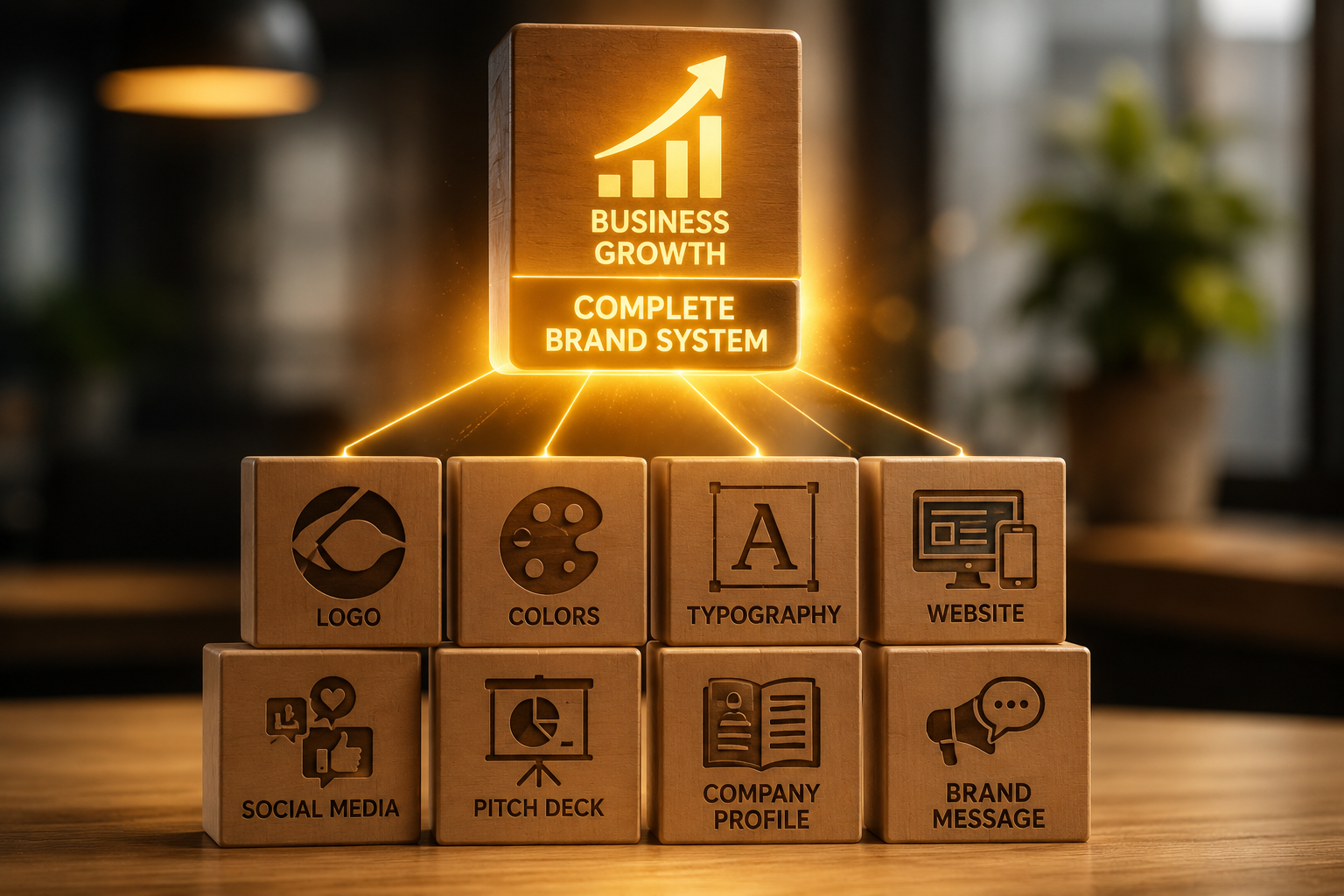
A brand system is a complete set of visual, verbal, and strategic elements that define how your business appears and communicates everywhere.
A brand system includes:
- Logo design
- Brand colors
- Typography
- Visual style
- Brand messaging
- Tone of voice
- Company profile design
- Pitch deck design
- Social media templates
- Website design direction
- Brand guidelines
- Marketing collateral
- Presentation style
- Digital brand assets
A brand system makes sure your business looks and sounds the same across all platforms.
Whether someone visits your website, sees your LinkedIn post, opens your company brochure, watches your ad, or receives your proposal, they should experience one clear and consistent brand identity.
Brand System vs Logo Design: What Is the Real Difference?
The main difference between Brand System vs Logo Design is the purpose each one serves.
A logo identifies your business.
A brand system builds the complete experience around your business.
Logo design answers:
“What does your business look like?”
A brand system answers:
“How should your business be remembered, trusted, presented, and experienced?”
A logo is a starting point. A brand system is the foundation for long-term brand growth.
Why Logo Design Alone Is Not Enough
Many businesses invest in a logo but still face branding problems later. This is why the Brand System vs Logo Design comparison is important for growing companies.
Their website looks different from their social media. Their brochures use different colors. Their pitch decks do not match their brand style. Their content tone changes from platform to platform.
This creates confusion.
When branding is inconsistent, customers may feel that the business is not professional, organized, or trustworthy.
A logo can make your business visible. But a brand system makes your business memorable.
In simple terms, Brand System vs Logo Design is not just a design choice. It is a business decision that affects how customers see, trust, and remember your brand.
Why Growing Businesses Need a Complete Brand System
1. It Builds Stronger Brand Consistency
Brand consistency means your business looks, feels, and communicates the same way everywhere.
When your website, social media, business profile, ads, and presentations follow the same design language, customers recognize your brand faster.
Consistent branding creates familiarity. Familiarity builds trust.
For example, when a company uses the same colors, fonts, layout style, messaging tone, and visual format across all platforms, the brand becomes easier to remember.
This is especially important for businesses trying to attract new customers, investors, partners, or decision-makers.
2. It Makes Your Business Look More Professional
A complete brand system gives your business a polished and premium appearance.
In the Brand System vs Logo Design comparison, this is one of the biggest advantages. A logo can make your brand visible, but a brand system makes your complete business presentation look professional across every platform.
Customers often compare businesses before making a decision. If your competitor has a more professional brand presentation, they may win trust faster.
Professional branding helps your business stand out in:
- Website visits
- Social media profiles
- Sales presentations
- Company profiles
- Proposals
- Digital ads
- Event materials
- Email campaigns
When every brand touchpoint looks aligned, your business appears more reliable, organized, and trustworthy. This is why Brand System vs Logo Design matters for growing businesses that want to create a premium first impression..
3. It Improves Customer Trust
Trust is one of the biggest factors in business growth.
Customers are more likely to choose a brand that looks clear, organized, and consistent.
If your brand identity changes from one platform to another, it may create doubt. But when your branding is consistent, customers feel that your business is serious and dependable.
A strong brand system helps customers understand who you are, what you offer, and why they should choose you.
4. It Supports Better Marketing
Marketing becomes easier when you have a complete brand system.
Your team does not need to create a new style for every poster, ad, presentation, or campaign. They can follow ready-made brand guidelines and templates.
This saves time and improves output quality.
A brand system helps marketing teams maintain consistency across:
- Social media campaigns
- Website banners
- Email newsletters
- Paid ads
- Brochures
- Flyers
- LinkedIn posts
- Event creatives
- Sales decks
When marketing materials follow one brand identity, the overall campaign becomes stronger.
5. It Helps Sales Teams Communicate Better
Branding is not only for marketing. It also supports sales.
Sales teams often use company profiles, pitch decks, proposals, case studies, presentations, and brochures to communicate with prospects.
If these materials look outdated or inconsistent, it can affect the customer’s first impression.
A professional brand system helps sales teams present the company with more confidence.
It makes the business look prepared, credible, and premium.
6. It Creates a Clear Brand Message
A brand system is not only about design. It also includes messaging.
Your brand message explains what your business does, who you help, what makes you different, and why customers should trust you.
Without clear messaging, even a good-looking brand may fail to connect with customers.
A strong brand system defines:
- Brand positioning
- Core message
- Tagline
- Service descriptions
- Website content direction
- Social media tone
- Sales communication style
This helps your business speak with one clear voice.
7. It Makes Rebranding Easier
As businesses grow, their brand needs may change.
A small startup may later become a premium service provider. A local company may expand into new markets. A traditional business may shift to digital platforms.
A brand system makes this transition easier.
Instead of changing only the logo, businesses can upgrade their complete identity, including messaging, website style, social media design, pitch decks, and brand communication.
This creates a smoother and stronger rebranding process.
Signs Your Business Needs a Brand System
When discussing Brand System vs Logo Design, one of the easiest ways to decide is to look at your current brand touchpoints. Your business may need a complete brand system if:
- Your logo looks good, but your marketing materials do not match
- Your website and social media look different
- Your sales deck does not feel professional
- Your company profile is outdated
- Your team uses different fonts, colors, and layouts
- Customers do not clearly understand your brand value
- Your brand looks less premium than your competitors
- You are planning to scale, launch, or rebrand
- You want to build stronger trust with customers
If these problems sound familiar, your business does not need only a logo. It needs a complete brand system.
What Should a Complete Brand System Include?
When comparing Brand System vs Logo Design, it is important to understand what makes a brand system complete. A strong brand system should include both strategy and design so that your business looks, sounds, and communicates consistently across every platform.
Here are the key elements:
Brand Strategy
Brand strategy defines the foundation of your business identity. It includes your positioning, audience, goals, values, and market difference. In the Brand System vs Logo Design discussion, strategy is what makes a brand system stronger than just a visual logo.
Logo and Visual Identity
This includes your logo, color palette, typography, icon style, visual direction, and design rules. Logo design is one part of the brand system, but it should work together with all other brand elements.
Brand Messaging
This includes your tagline, brand story, tone of voice, service descriptions, and communication style. A complete brand system ensures your message stays clear and consistent wherever your customers see your brand.
Website Brand Direction
Your website should reflect your brand identity clearly through design, content, images, colors, and user experience. This is where Brand System vs Logo Design becomes more practical, because a logo alone cannot create a complete website experience.
Social Media Brand Templates
Consistent social media templates help your brand look professional across LinkedIn, Instagram, Facebook, and other platforms. They help your audience recognize your brand faster.
Company Profile and Pitch Deck
A well-designed company profile and pitch deck help your business make a strong impression during sales, partnerships, and investor discussions. These materials should follow the same brand system as your website and social media.
Brand Guidelines
Brand guidelines help your internal team, designers, marketers, and vendors use your brand correctly across all platforms. They make sure your brand system stays consistent even as your business grows.
Brand System for Digital-First Businesses
Today, most customer journeys begin online. Before contacting a business, customers often check its website, LinkedIn page, Google profile, reviews, social media posts, and case studies.
This is where Brand System vs Logo Design becomes important. A logo may appear on your website or social media, but a complete brand system ensures every digital touchpoint looks consistent, professional, and trustworthy.
A digital-first brand system helps your business stay consistent across:
- Website
- Google Business Profile
- Email campaigns
- Digital ads
- Landing pages
- Online brochures
- Sales presentations
For modern businesses, the Brand System vs Logo Design difference is clear: logo design gives your brand visibility, while a brand system gives your business consistency across every online platform.
For modern businesses, branding is not just a design activity. It is a growth tool.
How Hezemon Helps Businesses Build Complete Brand Systems
Hezemon Technologies Pvt. Ltd. helps businesses move beyond logo design by creating complete brand systems. Through branding services, Hezemon supports brand strategy, logo design, visual identity, messaging, company profiles, pitch decks, website branding, and social media brand systems.
When comparing brand system vs logo design, a brand system gives businesses better consistency, credibility, and trust across every customer touchpoint.
Conclusion
A logo is important, but it is only one part of your brand.
A growing business needs more than a good-looking logo. It needs a complete brand system that connects design, messaging, marketing, sales, and customer experience.
A brand system helps your business stay consistent, build trust, improve recognition, and create a stronger professional image.
If your business wants to grow, compete, and communicate better, it is time to think beyond logo design.
Build a brand system that speaks clearly, looks professional, and supports long-term business growth.
Call to Action
Ready to build a brand that looks professional across every platform?
Partner with Hezemon Technologies Pvt. Ltd. to create a complete brand system for your business — from logo and visual identity to website branding, company profiles, pitch decks, and social media brand systems.
Build a brand that speaks one language everywhere.
FAQs
1. What is the difference between logo design and a brand system?
Logo design is only the visual mark of a business, while a brand system includes logo, colors, fonts, messaging, brand guidelines, website style, social media templates, company profile, and sales materials.
2. Why does my business need more than a logo?
Your business needs more than a logo because customers interact with your brand across many platforms. A complete brand system ensures your website, social media, pitch decks, ads, and brochures look consistent and professional.
3. What is included in a brand system?
A brand system usually includes brand strategy, logo design, visual identity, typography, color palette, messaging, tone of voice, brand guidelines, company profile, pitch deck, website direction, and social media templates.
4. How does brand consistency help business growth?
Brand consistency builds recognition and trust. When customers see the same brand identity across all platforms, they are more likely to remember and trust your business.
5. Is a brand system useful for small businesses?
Yes. A brand system is very useful for small and growing businesses because it helps them look more professional, compete better, and communicate clearly with customers.